Tank, Silo and Confined Space Cleaning: Permits, Testing, Rescue
Confined space cleaning is the removal of residue, sludge, product or dust from tanks, silos, hoppers, vessels, pits, sumps, ducts and similar enclosed spaces. They are hard to enter and exit, not designed for people to stay in, and can hold toxic gas, low oxygen, flammable vapour or engulfing material. The cleaning method matters, but the entry plan matters more.
Describe the job and add your city. Free to request, no obligation.
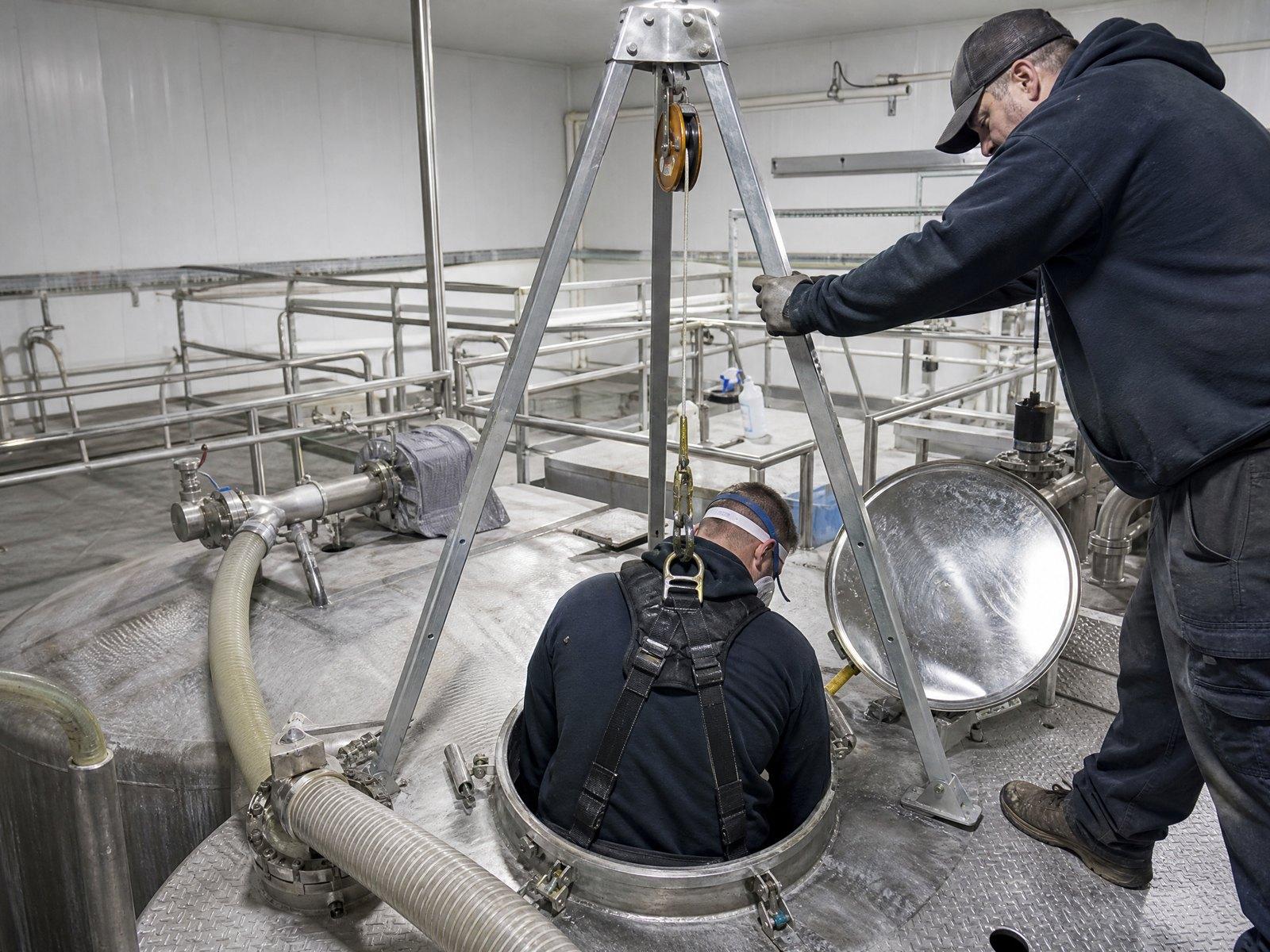
Safe entry is governed by confined space rules: OSHA 29 CFR 1910.146 for permit-required spaces in the US, and provincial regulations in Canada often built around CSA Z1006. Typical elements include a written hazard assessment, a permit signed before entry, atmospheric testing before and during the job, isolation and lockout of lines and moving parts, ventilation, an attendant outside the space and a rescue plan that can reach the person quickly. A quote that does not mention these is incomplete.
Many jobs can reduce or avoid entry. Vacuum trucks, remote tools, high-pressure water and robotic equipment can clean from outside, but not every tank allows it. Describe the vessel, what it held, its access openings, how the contents have been removed and what lockout points exist so the specialist can propose the safest method.
What the work includes
- Hazard assessment of the space, its contents and connected lines
- Entry permit preparation and review with your site safety contact
- Isolation, lockout and blanking of lines, with verification before entry
- Atmospheric testing for oxygen, flammables and toxic gas before and during the job
- Ventilation, lighting and non-sparking tools where flammable vapour is possible
- Cleaning methods such as vacuuming, scraping, pressure washing or chemical wash, chosen for the residue
- Attendant and rescue arrangements written into the plan
- Waste characterization, containment and removal of sludge, product and rinse water
When a tank or silo is due for cleaning
Product build-up or crust reducing capacity or flow
Contamination between batches or product quality complaints
Mould, odour or pests in a storage silo or hopper
An inspection, maintenance or regulatory deadline requiring an empty, clean vessel
A change in product that needs a thoroughly cleaned vessel
Sludge in the bottom of a tank, sump or pit
How the work goes, step by step
Space assessment
You describe the vessel, contents, access and history. A specialist visits and records hazards and options.
Method and permit plan
A written plan covers cleaning method, isolation, testing, ventilation, attendant, rescue and waste.
Isolation and testing
Lines are locked out and blanked, and the atmosphere is tested and logged before and during entry.
Cleaning
Work proceeds under the permit with the attendant in place and entry limits followed.
Close-out
The space is inspected, permits are closed out, waste is removed and records are handed over.
What changes the price
- Size and access
- Large vessels with small manways take longer and need more rescue planning than open pits.
- Residue type
- Sticky, hazardous or hardened residue is harder to remove and may need special disposal.
- Entry versus non-entry
- Cleaning without entry usually reduces risk and labour, but may need specialist equipment.
- Crew and equipment
- Attendants, rescue gear, gas monitors, vacuum trucks and ventilation all add cost.
- Isolation and shutdown
- Time to lock out, drain, purge and test before work starts is part of the job.
- Waste disposal
- Classified or hazardous waste costs more to haul and treat than ordinary solids.
What a good quote spells out
- How the quote deals with the permit, atmosphere testing, lockout and rescue
- Training and equipment for entrants, attendants and rescue personnel, and who provides them
- Whether non-entry methods were considered
- How waste is classified, contained, hauled and documented
- Who owns which responsibilities: host employer and contractor under the standard
Confined-Space Cleaning: questions people ask
What makes a space confined?
It is large enough to enter, has limited ways in or out and is not designed for continuous occupancy. Many also carry atmospheric, engulfment or mechanical hazards.
Is a permit always required?
Spaces with recognized hazards usually need an entry permit under OSHA or provincial rules. Your safety manager decides based on a hazard assessment.
Can a tank be cleaned without anyone entering?
Sometimes, with vacuum trucks, remote nozzles or robotic equipment. Many tanks still need an entry for inspection or finishing work.
What should a buyer ask a contractor about confined space entry?
Ask for their written entry program, who the attendant and rescue team are, how atmosphere testing is done and logged, and how waste is handled.
Does the host company stay involved?
Yes. Host employers share responsibility, including sharing hazards, coordinating isolation and approving the permit.
Other Ferrix services
Need Industrial-Grade Cleaning? Let's Walk Your Plant.
Tell us about your facility in the quote form. A specialist who serves your area follows up to arrange a site walk and prepare a written scope. Free to request, no obligation.
Request a free quote →